 Skip to the front page
In January 2026, European astronomers reported running a pattern-spotting program across nearly 100 million image cutouts from the Hubble archive, finishing the job in two and a half days. More than 800 of the objects it flagged had never been documented in scientific literature.
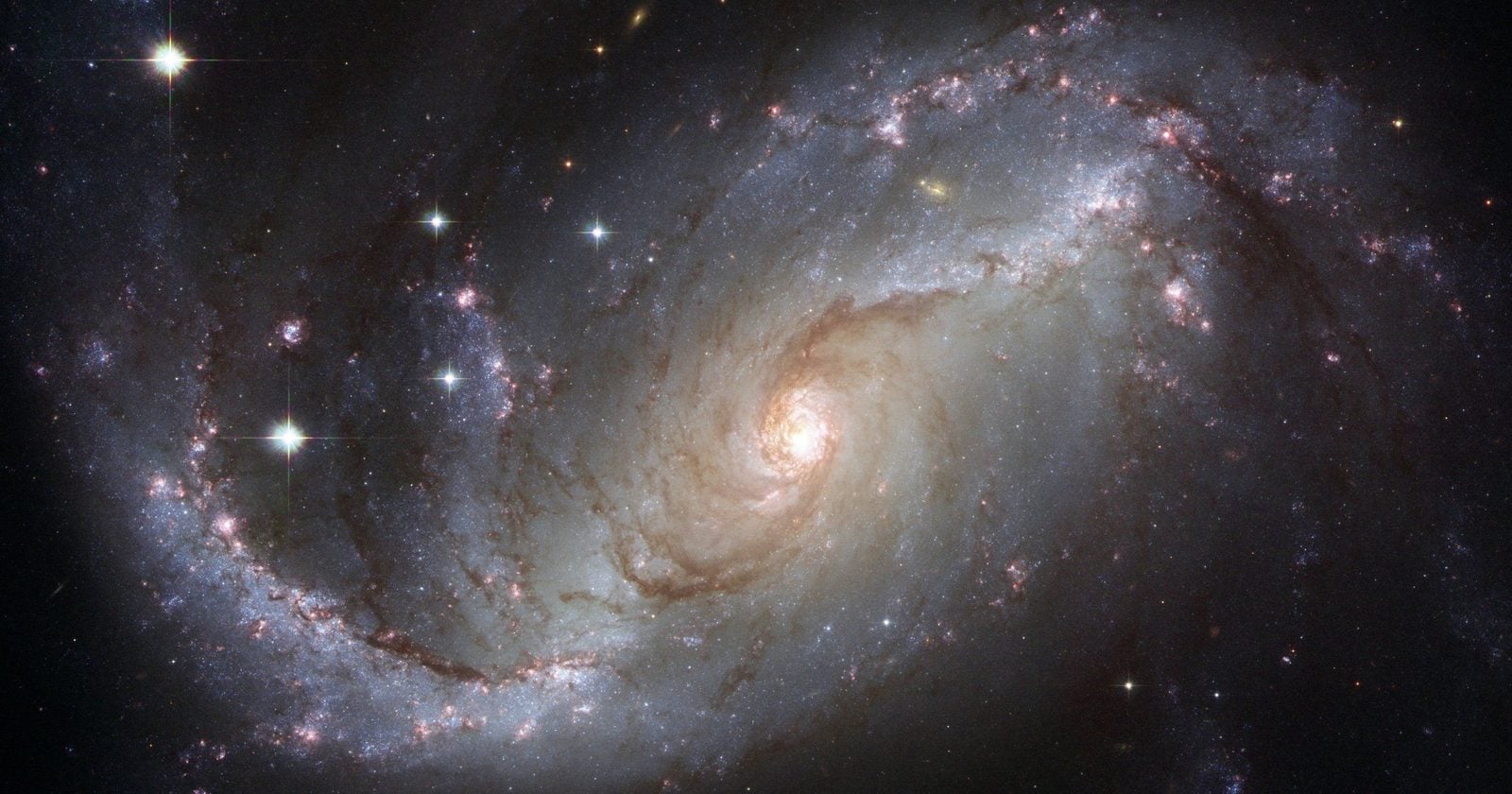
Two European Space Agency astronomers used a new AI tool to scan nearly 100 million image cutouts from the Hubble archive in about two and a half days, identifying over 1,300 genuine oddities and more than 800 objects that had never been documented in scientific literature. The findings, including many merging galaxies, gravitational lenses, ring galaxies, and jellyfish galaxies, demonstrate that valuable discoveries can emerge from archival data when pattern recognition is applied at scale.
In January 2026, European astronomers reported running a pattern-spotting program across nearly 100 million image cutouts from the Hubble archive, finishing the job in two and a half days. More than 800 of the objects it flagged had never been documented in scientific literature. # In January 2026, European astronomers reported running a pattern-spotting program across nearly 100 million image cutouts from the Hubble archive, finishing the job in two and a half days. More than 800 of the objects it flagged had never been documented in scientific literature. A.I. scanned decades of Hubble images in less than three days and discovered hundreds of cosmic objects that human astronomers had overlooked in plain sight. By The Daily Orbit · Edited by Mal James Published September 18, 2026 · How we edit Photo: Pixabay / Pexels As reported by ESA Hubble, more than 800 objects that had never appeared in the scientific literature, pulled from data that had been sitting in an archive for years. It took two and a half days. Not two and a half years of grant applications and follow-up work. Two and a half days of computer time. The work came from two European Space Agency astronomers, David O’Ryan and Pablo Gómez. They pointed a new AI tool at the Hubble archive and let it sort through nearly 100 million small image cutouts. The results were published in the journal Astronomy & Astrophysics. What strikes us is not that a machine found strange things in the sky. It found them in pictures we had already taken. ## The number that stops you As mentioned, the tool worked throug…
the newsroom’s read
AI scanning the entire Hubble archive in days to discover hundreds of unknown objects is a fantastic, shareable space story.
Proof sheet
- name
- Hubble AI Scanner
- ticker
- $HUBL
- description
- Spacedaily reports that European astronomers used an AI tool to scan Hubble archives, uncovering hundreds of previously undocumented cosmic objects.